Guillermo Ochoa: The Mythic legend of Mexican football
Across five World Cups, Memo Ochoa has transformed from a backup into Mexico’s mythic guardian of the goal. As the veteran icon targets a record sixth tournament, his legendary saves against football's giants have secured his status.
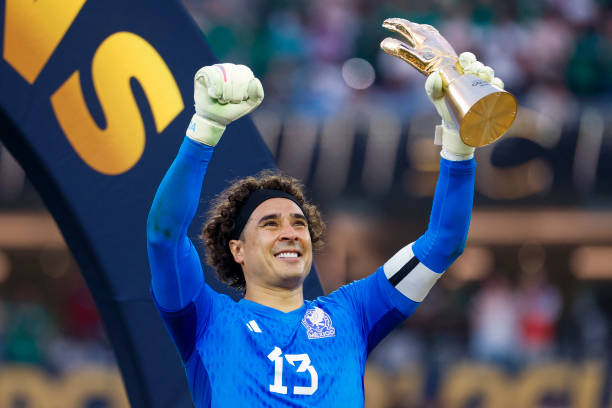
Veteran goalkeeper Guillermo “Memo” Ochoa (born 1985) has become the living folklore of the Mexican national team, featuring in every World Cup since 2006. Time and again he has answered the call with miraculous saves - performances so storied that Reuters notes he “has spent two decades turning World Cups into personal theatre”. Across five tournaments (2006–2022) he compiled legends of acrobatic stops - from 2014’s epic Brazil draw to 2018’s shock win over Germany and a penalty block in 2022 - earning him cult‐hero status among fans.
Memo Ochoa: Mexico’s Mythic Goalkeeper
Born in Guadalajara in 1985, Guillermo “Memo” Ochoa has long been Mexico’s iron‐willed guardian between the posts. A club career spanning Mexico, France, Spain, Belgium and Cyprus has only underscored his international fame. At World Cups he often arrived quietly – third‐choice in 2006 and injured in 2010, but by Brazil 2014 he had his moment. There in Fortaleza he made “remarkable save after remarkable save,” as TIME put it, repelling two drives from Neymar, a blast from Paulinho and a Silva header to earn a 0–0 draw. Those heroics cemented his legend.
In folklore‐like fashion, each tournament freshened the memory of Ochoa’s feats. In 2018 he repeated the act on an even bigger stage: in Mexico’s 1–0 upset of defending champions Germany, AP News described how Ochoa “pulled off a spectacular save,” tipping a Toni Kroos shot onto the bar. Eight years later in Qatar he did it again – saving Robert Lewandowski’s World Cup penalty to deny Poland victory. The Qatar Tribune notes that his 37-year-old frame added “another clean sheet to a CV that features World Cup shutouts against Brazil and Germany”. Even pundits began to speak of Ochoa in mythical terms, calling him “one of the country’s defining figures” for such moments.
Throughout Mexico, these games acquired campfire-tale status. Teammates treat him as a talisman. Young midfielder Érik Lira said simply: “Memo [Ochoa] is an icon for everyone… I grew up watching him with the national team. Seeing him is a privilege, an honor”. Forward Guillermo Martínez echoed the sentiment: “The entire country admires him, what he’s achieved is not easy”. Ochoa himself shares the legend’s humility. In a moving message to fans he reflected that pulling on the Mexico jersey has “never [been] routine… it was a privilege”, and even now “with more scars, more memories”, his hope was the same as the boy who first dreamed of defending the badge.
In Mexican football culture, where idolizing goalkeepers (from the flamboyant Jorge Campos to today’s stoic keeper) is almost a ritual, Ochoa has outgrown even superstar status. As one sports writer put it, he is “arguably the greatest Mexican player in World Cup history”. The chants of “Oochoa!” and glowing social‐media threads show how each save is recounted like legend. Even as his body flags with age, fans treat him as evergreen: at 40 he still sprints for every loose ball, feeding the legend that he “always lives it like it’s the first time,” as they say.
Now Ochoa heads into a historic sixth World Cup - an unprecedented feat (only Messi and Ronaldo share it) - and Mexican lore is eager for one last chapter. Reuters observes that he has long “spent two decades turning World Cups into personal theatre,” and at home the myth is complete: Memo Ochoa is not just a player but a living embodiment of Mexico’s footballing saga. Every time the whistle blows, fans feel an old story starting anew, and Ochoa, the eternal boy‐man in goal, is there to write it.