PSG vs Arsenal: 2026 Champions League final analysis
PSG secured a second consecutive Champions League title after a penalty shootout victory over Arsenal in a final dominated by tactical extremes. Luis Enrique’s side controlled 75% of the ball to overcome the Gunners' resilient deep block.
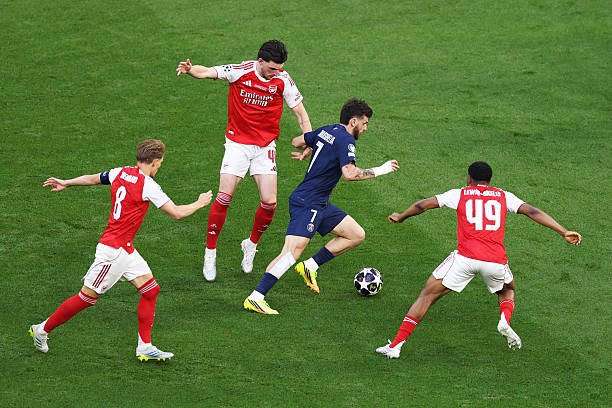
The 2025–26 Champions League final will be remembered as a contest of two distinct tactical identities: a battle between PSG’s relentless, suffocating possession and Arsenal’s disciplined, deep-block resilience. In the end, PSG secured their second consecutive European crown with a 4-3 victory on penalties after the match finished 1-1 following 120 minutes. However, the scoreline barely hints at the sheer statistical dominance Luis Enrique’s side exerted, particularly in the expected goals (xG) metric, which the neutral observer might find most revealing.
PSG (1.72) vs. Arsenal (0.51): A Tale of Two xG Profiles
The most illuminating statistic from the final is the disparity in expected goals. PSG accumulated a total xG of 1.72 from their 21 shots, compared to Arsenal’s meager 0.51 from just 7 attempts. This gap highlights the differing nature of each team’s attacking output.
Breaking down the xG further reveals where the game was truly won and lost in open play. PSG generated 0.75 xG from open play, while Arsenal managed only 0.39. The remaining chunk of PSG’s total came from their converted penalty, a high-value chance worth 0.80 xG. When we remove that penalty from the equation, PSG’s non-penalty xG was 0.93, still nearly double Arsenal’s entire output. Notably, PSG also underperformed slightly relative to their xG on target (xGOT), posting 1.68 from shots that actually tested the goalkeeper, a testament to the quality of Arsenal’s last-ditch defending and the pressure applied to PSG’s shooters.
The Arsenal Equation: Defensive Solidity vs. Attacking Futility
Mikel Arteta’s game plan was clear from the opening whistle: absorb pressure and strike on the break. After Kai Havertz’s early goal, a finish worth just 0.08 xG from a tight angle, Arsenal executed their defensive duties with remarkable discipline. The back line of William Saliba and Gabriel, shielded by Declan Rice, limited a free-scoring PSG attack to just four shots on target. Their 36 clearances and 18 tackles were crucial in keeping the match within reach. The statistics show a team that successfully parked the bus, but at a great cost. Arsenal mustered only one shot on target throughout the entire 120 minutes and recorded a staggeringly low possession figure of just 25%, the lowest by any team in a Champions League final since Opta began recording the statistic.
PSG’s Control: A Masterclass in Useless Dominance?
The numbers for Luis Enrique’s side are almost obscene. They enjoyed 75% possession and completed an incredible 809 of their 889 passes for an accuracy of 91%. Their control of the ball was total, but the match narrative complicates this statistical supremacy. Despite the heavy volume of passes and 21 total shots, PSG failed to break down Arsenal’s low block from open play. Their winning goal, the penalty converted by Ousmane Dembélé, and the bulk of their high-value xG came from a single set-piece situation, highlighting the challenge of penetrating a world-class defense that is willing to concede the wings and challenge crosses.
Context and Conclusion
The final result was a victory for control over chaos. While the aggregate statistics paint a picture of a one-sided contest, the match was decided by the narrowest of margins: a successful penalty kick from Ousmane Dembélé and a failed one from Gabriel Magalhães. Arsenal’s defensive statistics were heroic, but ultimately, their inability to muster any sustained attacking threat beyond the eighth minute left them vulnerable to the mounting pressure of PSG’s territorial dominance. PSG’s win confirms them as the kings of Europe, but the statistics from the final suggest a team that, despite overwhelming control, is only human, and perhaps just a fraction less invincible than the final scoreline suggests.