World Cup History: A visual journey through FIFA's past
With the 2026 World Cup on the horizon, we explore the tournament's expansive history through a new interactive lens, tracing the growth from 13 nations in 1930 to the modern 48-team era.
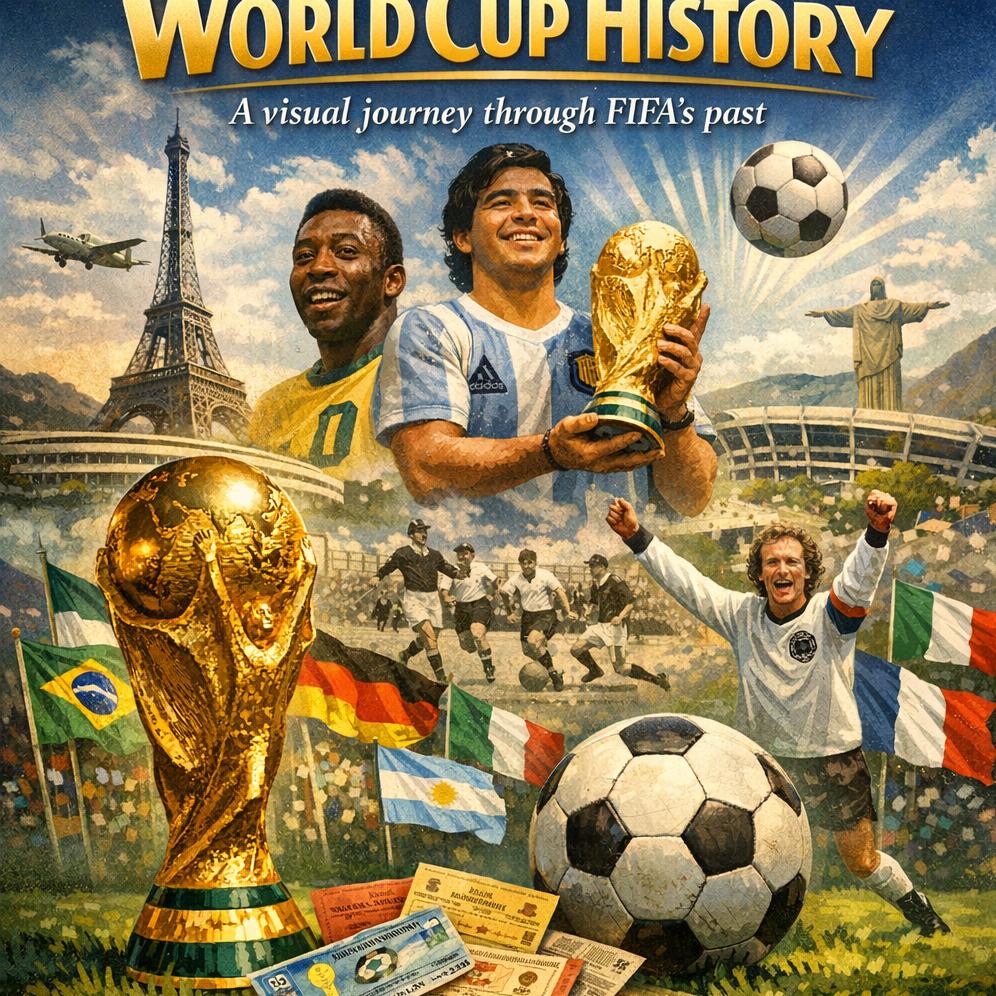
As the countdown to the 2026 FIFA World Cup begins, the footballing world is preparing for a tournament of unprecedented scale. But to appreciate where the beautiful game is going, across the vast landscapes of North America, it is essential to look back at the humble roots from which this global phenomenon grew. The journey from the inaugural 1930 edition in Uruguay to the present day is a story of shifting geopolitical power, sporting innovation, and the relentless expansion of the world’s most popular sport.
The evolution of the competition's geography tells its own unique story. For decades, the World Cup was largely a duopoly between Europe and South America. It took until 1970 for the tournament to venture into North America via Mexico, and much longer to reach the shores of Asia and Africa. Each expansion of the host selection process has helped democratize the sport, turning a regional pastime into a truly universal spectacle that captures the undivided attention of billions every four years.
Statistically, the changes are just as staggering. The original tournament featured just 13 invited nations, a far cry from the complex qualification cycles and 48-team format we are about to witness. Data from the Opta Analyst Atlas highlights how the balance of power has subtly tilted over time. While giants like Brazil and Germany have maintained their historical dominance, the gap between the traditional elite and emerging nations from CAF and the AFC has narrowed significantly, as evidenced by recent shock results on the world stage.
Interactive mapping of every match played in the history of the competition reveals more than just scores; it reveals the tactical shifts of different eras. From the high-scoring, five-forward systems of the 1950s to the defensive rigidity of the 1990s and the high-pressing intensity of the modern game, the fingerprints of every great manager are visible in the data. These trends serve as a roadmap for the future, illustrating how global coaching standards have harmonized across continents.
Beyond the numbers, the heritage of the World Cup is defined by its iconic locations. Every stadium, from the towering Estádio do Maracanã to the sleek, futuristic arenas set to host the 2026 final, acts as a cathedral for the sport. These venues are the backdrop for the individual brilliance of legends like Pelé, Diego Maradona, and Lionel Messi, whose careers were fundamentally shaped by their exploits on this specific stage.
As fans prepare for the next chapter in the United States, Mexico, and Canada, revisiting historical data provides a vital sense of perspective. It reminds us that while the technology and the scale of the event have changed beyond recognition, the core emotion remains the same. The World Cup continues to be a unique cultural touchstone, capable of uniting disparate nations through the shared language of football.